This research highlights the strong association between preeclampsia (PE) risk, assessed at 12 and 36 weeks gestation using Fetal Medicine Foundation (FMF) models, and the likelihood of spontaneous labor (SL) and intrapartum fetal compromise (FC) requiring cesarean delivery. Placental and cardiovascular dysfunctions are key underlying factors. The study emphasizes that higher PE risk categories are linked to earlier spontaneous labor and increased hazard of fetal compromise, necessitating personalized perinatal care.
Objective
To evaluate whether preeclampsia (PE) risk models at 12 weeks (PE-12) and 36 weeks (PE-36) predict spontaneous labor (SL) onset and intrapartum fetal compromise (FC).
Study Design
Secondary analysis of 9,073 singleton pregnancies screened at both 12 and 36 weeks using Fetal Medicine Foundation (FMF) PE risk models
Key Takeaways
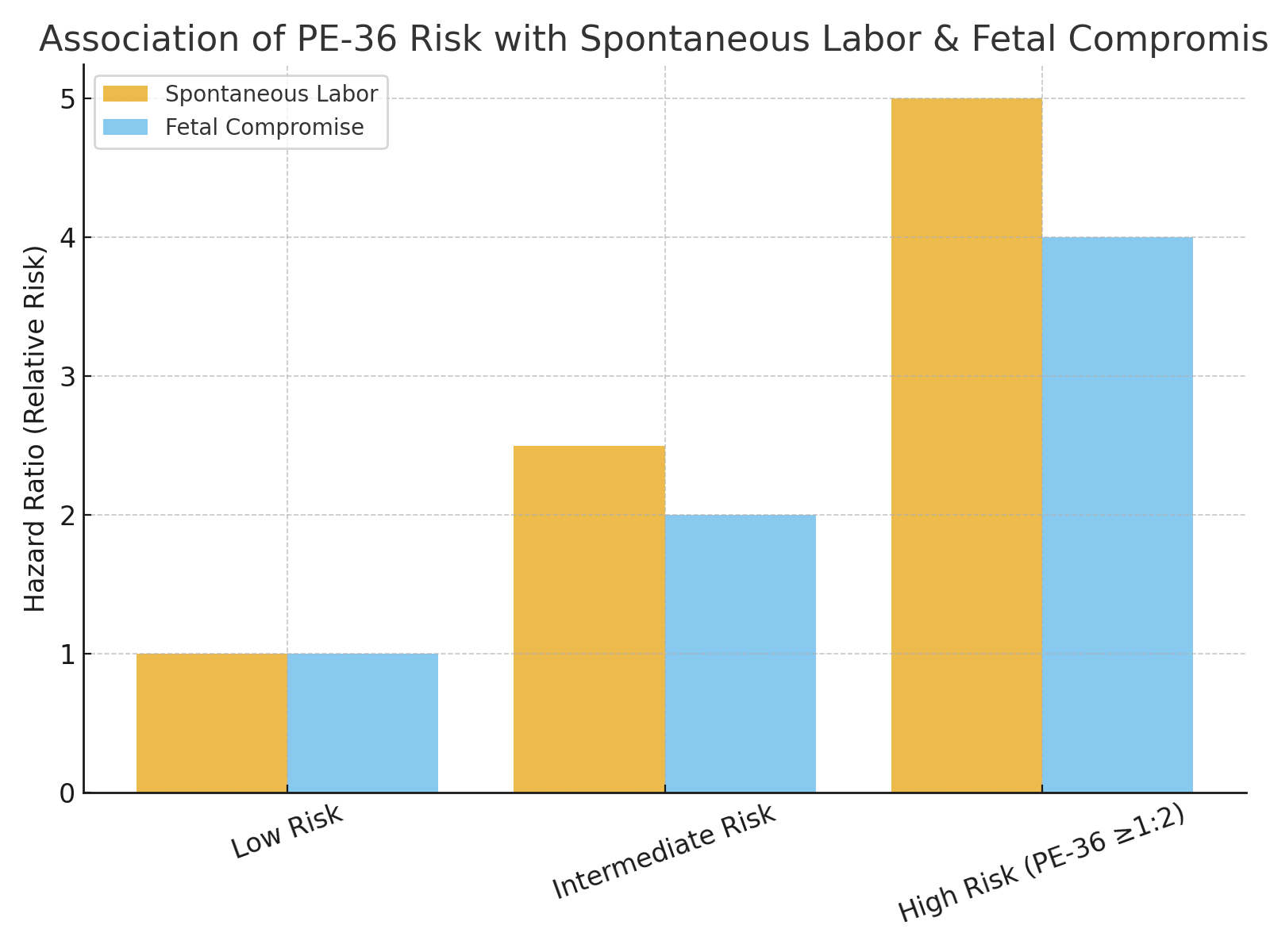
PE Risk as a Predictor: FMF PE risk models (especially at 36 weeks) are strong predictors of both spontaneous labor timing and intrapartum fetal compromise.
Early SL & FC: Higher PE risk is associated with earlier spontaneous labor and a greater risk of fetal compromise.
Combined Screening Value: Integrating 12-week and 36-week PE risk assessments improves the detection of fetal compromise, even in initially low-risk cases.
Personalized Care: These findings advocate for individualized antenatal surveillance, intrapartum care, and delivery timing based on a woman’s specific PE risk profile.
PE36_risk_chart
Key Data/Treatment Protocols
PE Risk Category (FMF 36-week)
Spontaneous Labor Hazard
Fetal Compromise Hazard
A (≥1:2)
Highest, earliest SL
Highest
B (1:5 to <1:2)
High
High
C (1:20 to <1:5)
Moderate
Moderate
D (1:50 to <1:20)
Low
Low
E (<1:50)
Lowest, latest SL
Lowest
A simplified diagram showing the link between placental dysfunction, preeclampsia, and its potential impact on fetal well-being and labor onset.
Conclusion
FMF PE risk models (especially PE-36) are valuable tools to guide timing of monitoring, delivery, and intrapartum care, enabling more personalized perinatal management
Integrating PE-12 and PE-36 underscores the importance of comprehensive risk assessments in guiding personalized perinatal care and identifying pregnancies needing closer monitoring, earlier delivery or tailored intrapartum management to reduce FC risks