Shopping Cart
Total:

$0.00

Items:

0

Your cart is empty
Keep Shopping

Anti-Müllerian hormone as a diagnostic marker of PCOS

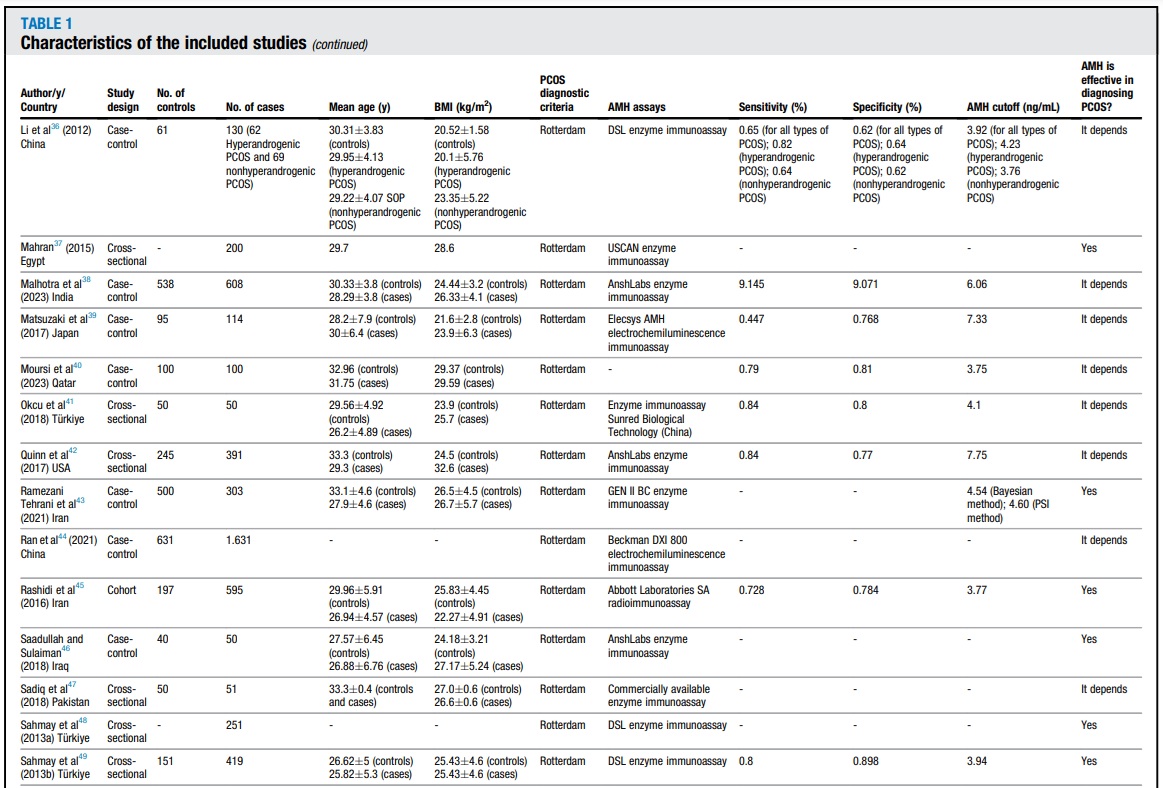
Review article published American Journal of Obstetrics and Gynecology June 2025 digs into whether measuring “anti-Müllerian hormone (AMH) in blood can help diagnose polycystic ovary syndrome (PCOS), comparing it to androgen levels and ultrasound scans.” It covers 45 studies, weighing up sensitivity and specificity, and points out that AMH could be a useful marker if we consider factors like age, BMI, and PCOS types.

  • AMH showed around 80-85% sensitivity and specificity in detecting PCOS
  • The hormone levels also seemed to reflect how severe the syndrome was
  • The evidence certainty was rated as low, so AMH should be an extra tool, not a standalone test

Analytical Performance and Considerations for AMH Use

  • Isolated AMH has diagnostic strength independent of phenotype, but PCOS phenotypes should be considered as they reflect the severity of PCOS and reveal PCOM .
  • Ethnicity and BMI also require consideration when interpreting AMH levels .
  • There is no consensus on whether BMI affects AMH levels, with some studies showing a positive association and others a negative correlation.
PCOS

Meta-Analysis Results and Study Limitations

  • The meta-analysis of case-control studies showed a sensitivity of 81%, specificity of 82%, area under the SROC curve of 87.87%, and DOR of 19.66, while that of cross-sectional studies demonstrated sensitivity, specificity, SROC curve, and DOR of 80%, 85%, 89.38%, and 19.05, respectively .
  • The analysis of the certainty of the evidence in this systematic review was considered “low,” influenced by the high heterogeneity of the included studies .
  • The strength of this systematic review lies in identifying factors that influence AMH concentrations and explaining why these factors should receive greater attention
Certainty of evidence in case-control and cross-sectional studies.

Conclusion and Acknowledgements

  • Serum AMH level can be used as a diagnostic marker for PCOS, provided factors such as age, standardization of assays, PCOS phenotypes, and BMI are considered .
  • Otherwise, this hormone should be used as an adjuvant to the PCOS diagnostic criteria established by the consensus and/or guidelines .
  • The authors thank librarian Cícera Daniele da Silva for her instructions on the search strategy in the first stage of this review 
AMH level helps diagnose PCOS when considering age, assay, phenotype, and BMI.
- Mariane de Oliveira Gomes et al
Show Comments (0) Hide Comments (0)
0 0 votes
Article Rating
Subscribe
Notify of
guest
0 Comments
Oldest
Newest Most Voted
Inline Feedbacks
View all comments
0
Would love your thoughts, please comment.x
()
x