


Shopping Cart
Total:

$0.00

Items:

0

Your cart is empty
Keep Shopping

Childbirth simulation using virtual reality

Title: Virtual reality simulation training for childbirth: A cluster randomized crossover study
Authors: Arundhati Gosavi et al.
Journal: International Journal of Gynecology & Obstetrics (March 2025)

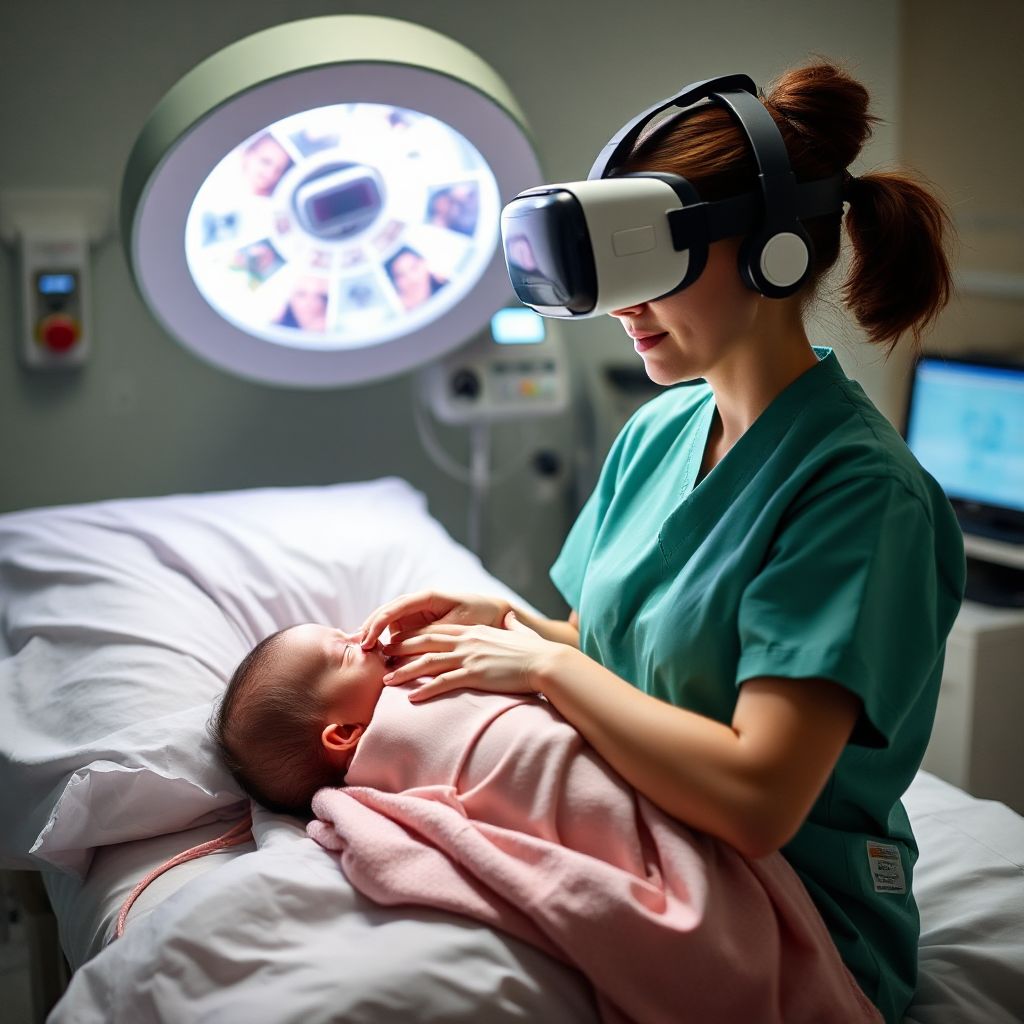
This cluster randomized crossover study compared virtual reality (VR) simulation to mannequin-based simulation for teaching normal vaginal delivery (NVD) to medical students. Using a novel, internally developed VR simulator (ViVaDeX, Oculus® Quest 2 HMD) and the PROMPT Flex® mannequin, students underwent both training modalities before clinical exposure. Knowledge acquisition and feedback were rigorously measured by pre- and post-simulation quizzes and detailed questionnaires.

Key Points

Study Design & Population

  • 111 medical students (20 clinical groups) randomized to either VR or mannequin-first, then crossed over.
  • Assessed improvement in NVD knowledge and domain-specific feedback.

Knowledge Acquisition

  • VR simulation resulted in a significantly higher post-simulation mean percentage correct score: 79% vs. 54% for mannequin (P<0.001).
  • Knowledge improved more with VR (+40.8%) than mannequin (+15.1%).

Feedback & User Experience

  • Mannequin simulation scored higher in overall feedback (61.0 vs. 58.3; P=0.002) and in 5/6 domains (control/usability, enjoyment, feedback, immersion, knowledge retention).
  • 42% of participants preferred a mixed approach to simulation; only 4.5% preferred VR alone.

Domain Analysis

  • VR excelled in knowledge delivery.
  • Mannequin simulation outperformed in usability, confidence-building, enjoyment, and realism.

 Preferred Future Model

  • Majority favored blended learning combining VR and mannequin approaches
Childbirth simulation using virtual reality

Key Findings

  • VR simulation is superior to mannequin simulation for content delivery and immediate knowledge gains.

  • Mannequin-based methods provide stronger experiences in usability, confidence, and realism, as per user feedback.

  • Most students preferred a mix of VR and mannequin simulation, rather than either alone.

  • Lack of haptic feedback and peer learning in current VR version are areas for improvement.

Key Clinical Points

Blended Simulation Benefits

  • Incorporating VR as a primer or remote learning tool can complement traditional methods and expand access, especially where mannequin/tutor resources are limited.

Scalability & Remote Learning

  • VR platforms can be scaled for distance learning, supporting skill development in global health and low-resource settings.

Practical Recommendations

  • Medical educators should consider blended models to optimize childbirth skills training.
  • Improvements in haptic feedback and multi-learner environments could enhance VR training effectiveness.

Global Relevance

  • Potential to aid in training skilled birth attendants to advance maternal health goals, especially in lower-income countries.

One of the most immediate benefits of digital minimalism is the boost it can give to your focus and productivity. By deliberately reducing distractions, such as unnecessary app notifications or constant email alerts, you create a more conducive environment for deep work. 

2. Better Mental Health

Digital minimalism can have a profound impact on your mental well-being. The constant barrage of information from social media platforms, news outlets, and other digital channels can lead to what experts call “information overload.” This phenomenon often results in feelings of anxiety, and even burnout, as our brains struggle to process the sheer volume of data we consume on a daily basis.

3. Improved Relationships

By reducing your dependence on digital platforms and choosing to be more present in the moment, you can strengthen your relationships with the people around you. Whether it’s spending quality time with family, engaging in meaningful conversations with friends, or simply listening more attentively to a colleague, digital minimalism encourages you to invest in the relationships that truly matter.

"Virtual reality boosts knowledge for childbirth training, but students prefer blended learning with traditional simulation for optimal skill and confidence."
Show Comments (0) Hide Comments (0)
0 0 votes
Article Rating
Subscribe
Notify of
guest
0 Comments
Oldest
Newest Most Voted
Inline Feedbacks
View all comments
0
Would love your thoughts, please comment.x
()
x