





Shopping Cart
Total:

$0.00

Items:

0

Your cart is empty
Keep Shopping

Deep learning for automatic identification of zona pellucida-binding human sperm.

The article “Automatic identification of human spermatozoa with zona pellucida-binding capability using deep learning” describes a study to create a new method for assessing male fertility for assisted reproductive technologies (ART). It highlights the limitations of the current subjective manual assessment of sperm morphology, which is based on World Health Organization (WHO) criteria and has limited predictive power for fertilization outcomes

Here's a summary of the article's key points

Study Objective: The goal was to develop a deep-learning algorithm, independent of WHO grading, to identify human spermatozoa that can bind to the zona pellucida (ZP) to predict their fertilization potential

Methodology:

  • A pre-trained deep-learning model called VGG13 was fine-tuned using a database of 1083 images of ZP-bound and unbound spermatozoa.
  • The model was clinically validated on over 33,000 sperm images from 117 men undergoing in vitro fertilization (IVF) who were categorized into three groups based on their fertilization rates (low, intermediate, and high).

Main Results:

  • The VGG13 model successfully classified ZP-bound and unbound spermatozoa with high accuracy (96.7%), sensitivity (97.6%), specificity (96.0%), and precision (95.2%).
  • The model also showed excellent generalization ability, with a strong correlation between the predicted percentage of ZP-binding spermatozoa and actual IVF fertilization rates.
  • It outperformed conventional semen analysis in identifying patients at risk of fertilization failure during conventional IVF.
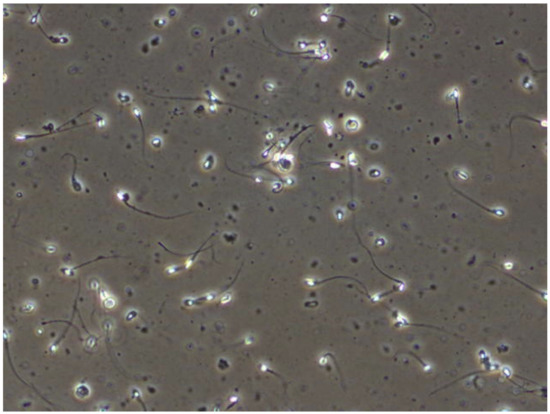
Automatic identification of human spermatozoa

Wider Implications

This new method can help clinicians identify couples at high risk of unexpected IVF fertilization failure, allowing them to offer alternative insemination methods and improve fertilization outcomes

The article notes a limitation: the model was designed for high-resolution, air-dried, Diff-Quik stained sperm samples, and further research is needed to validate its performance on different image qualities and a larger sample size.

Show Comments (0) Hide Comments (0)
0 0 votes
Article Rating
Subscribe
Notify of
guest
0 Comments
Oldest
Newest Most Voted
Inline Feedbacks
View all comments
0
Would love your thoughts, please comment.x
()
x