Shopping Cart
Total:

$0.00

Items:

0

Your cart is empty
Keep Shopping

Why Rough Deliveries Lead to High Blood Pressure Years On

Micronutrient gaps in Indian women are strikingly consistent across life stages: adolescent girls, women planning pregnancy, pregnant and lactating mothers, and postmenopausal women all commonly fall short on iron, calcium, vitamin D and other key nutrients. 

Recent article shows how this double burden of undernutrition and obesity quietly fuels anaemia, infertility, pregnancy complications, bone loss and menopausal symptoms—despite most clinicians routinely “talking” about diet. 

It argues that moving from casual advice to structured, age‑ and condition‑specific nutrition and supplementation protocols could turn every gynaecology visit into a powerful prevention touchpoint for women’s long‑term health.

Micronutrients Across a Woman’s Life: What 484 Indian Gynaecologists Reveal About Hidden Deficiencies and Smarter Supplementation

Indian gynaecologists report a double burden of malnutrition and obesity among women, with pervasive micronutrient gaps and low nutrition awareness across the life course—from adolescence to menopause.

A new Indian survey of 484 gynaecologists exposes a quiet crisis behind the clinic door: women across all life stages are living with unrecognised iron, calcium, vitamin D and B12 deficiencies, while only a small fraction understand their true dietary needs. From choosing low‑dose iron in pregnancy to recommending vitamin D and omega‑3 for PCOS and endometriosis, doctors are already adapting their micronutrient strategies—but the findings make one thing clear: structured, lifecycle‑based nutrition counselling must become a core part of women’s healthcare in India.

“This survey shows that for Indian women, malnutrition and obesity often sit in the same waiting room—and micronutrient gaps cut across both.”

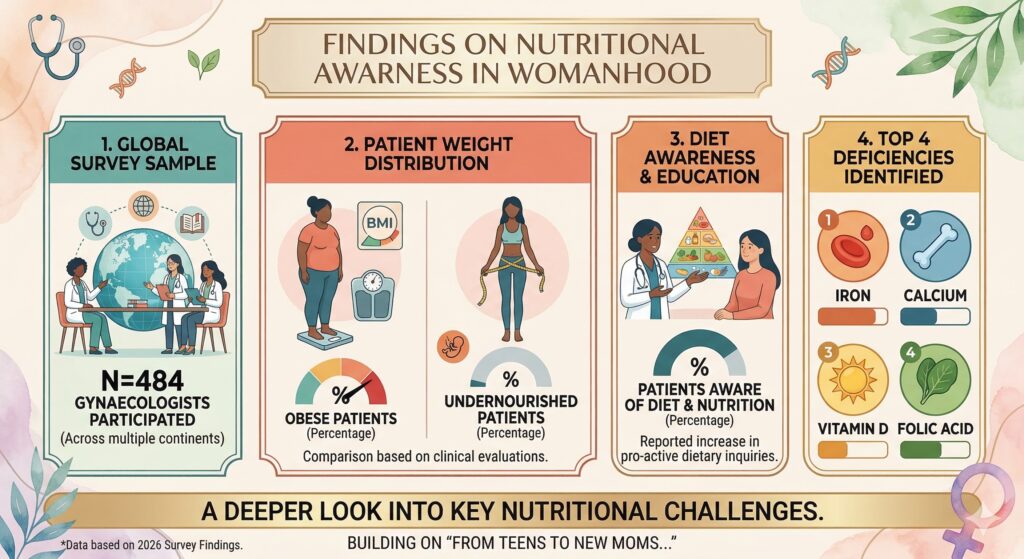
  • Nearly half of gynaecologists reported that at least 25% of their patients were obese, while 23.3% said ≥25% were undernourished, reflecting a double burden.

  • About 67.6% felt fewer than one in four patients knew their age‑appropriate dietary requirements.

  • Iron, calcium and vitamin D were the most common deficiencies, followed by iron and vitamin B12.

  • For infertility, vitamin D and zinc were the key micronutrients linked with deficiency.

  • 85.3% advised higher protein intake for women planning pregnancy, and most emphasised folic acid, iron, calcium and vitamin D.

  • 94.4% routinely prescribed iron in pregnancy; 71.1% preferred lower-dose (~29 mg) iron for longer duration to reduce GI intolerance vs high-dose (100 mg).

  • For PCOS, 78.1% associated vitamin D deficiency; weight management advice centred on calorie restriction plus exercise.

  • For endometriosis, 71.5% recommended an anti‑inflammatory, antioxidant‑rich diet and 70.5% emphasised omega‑3 fatty acids.

  • In perimenopause/menopause, calcium, vitamin D, magnesium, omega‑3 and B‑vitamins were prioritised, particularly for bone health and symptom control; 84.3% routinely gave calcium + vitamin D in osteoporosis.

Clinical Points
  • Integrate routine micronutrient assessment (iron, vitamin D, calcium, B12) into care pathways for adolescent girls, reproductive‑age women, and postmenopausal patients.

  • For preconception care, systematically address protein intake and ensure folic acid, iron, calcium and vitamin D optimisation to support fertility and early pregnancy.

  • In pregnancy, consider lower‑dose, longer‑duration iron regimens to balance efficacy with GI tolerability and adherence.

  • For PCOS, combine vitamin D optimisation with weight management and balanced macronutrient advice, rather than extreme diets.

  • For endometriosis, include diet (anti‑inflammatory, antioxidant‑rich, omega‑3) as an adjunct to pharmacological and surgical treatments.

  • Emphasise calcium and vitamin D (plus magnesium and vitamin K) in perimenopausal/postmenopausal women for bone health and symptom relief.

"Nutrition counselling should be as routine in gynaecology as blood pressure measurement, from menarche to menopause."

Life Stage / ConditionKey Gaps (as seen in practice)Main Micronutrient Focus (Doctors’ Responses)
Adolescent girlsHigh anaemia; low calcium/iron intake; poor diet awareness. article-6-2.pdfBalanced diet with adequate calcium & iron; all essential vitamins/minerals. article-6-2.pdf
PreconceptionInfertility linked to vitamin D, zinc deficits. article-6-2.pdfFolic acid, iron, calcium, vitamin D; increased protein intake. article-6-2.pdf
PregnancyCommon iron deficiency; GI intolerance to high‑dose iron. article-6-2.pdfRoutine iron (often low‑dose long‑term), plus folate, calcium, vitamin D. article-6-2.pdf
Postpartum / LactationNeglected nutrition; high demands for infant growth. article-6-2.pdfCalcium, vitamin D, iron, folic acid, omega‑3/DHA. article-6-2.pdf
PerimenopauseSymptoms (hot flashes, mood, joint pain); rising NCD risk. article-6-2.pdfCalcium, magnesium, vitamin D, omega‑3, B‑vitamins, antioxidants. article-6-2.pdf
Postmenopause / OsteoporosisLow calcium intake; low supplement use. article-6-2.pdfRoutine calcium + vitamin D; sometimes magnesium, vitamin K. article-6-2.pdf
PCOSHigh PCOS prevalence; strong link with vitamin D deficiency. article-6-2.pdfVitamin D, balanced diet, weight control. article-6-2.pdf
EndometriosisPain and inflammation; role of diet underused by some. article-6-2.pdfAnti‑inflammatory, antioxidant‑rich diet; omega‑3, vitamin E. article-6-2.pdf

Despite 78.7% of gynaecologists discussing healthy diets with patients regularly, over two-thirds believe that fewer than 25% of their patients understand what constitutes a balanced diet for their age.

Show Comments (0) Hide Comments (0)
0 0 votes
Article Rating
Subscribe
Notify of
guest
0 Comments
Oldest
Newest Most Voted
Inline Feedbacks
View all comments
0
Would love your thoughts, please comment.x
()
x